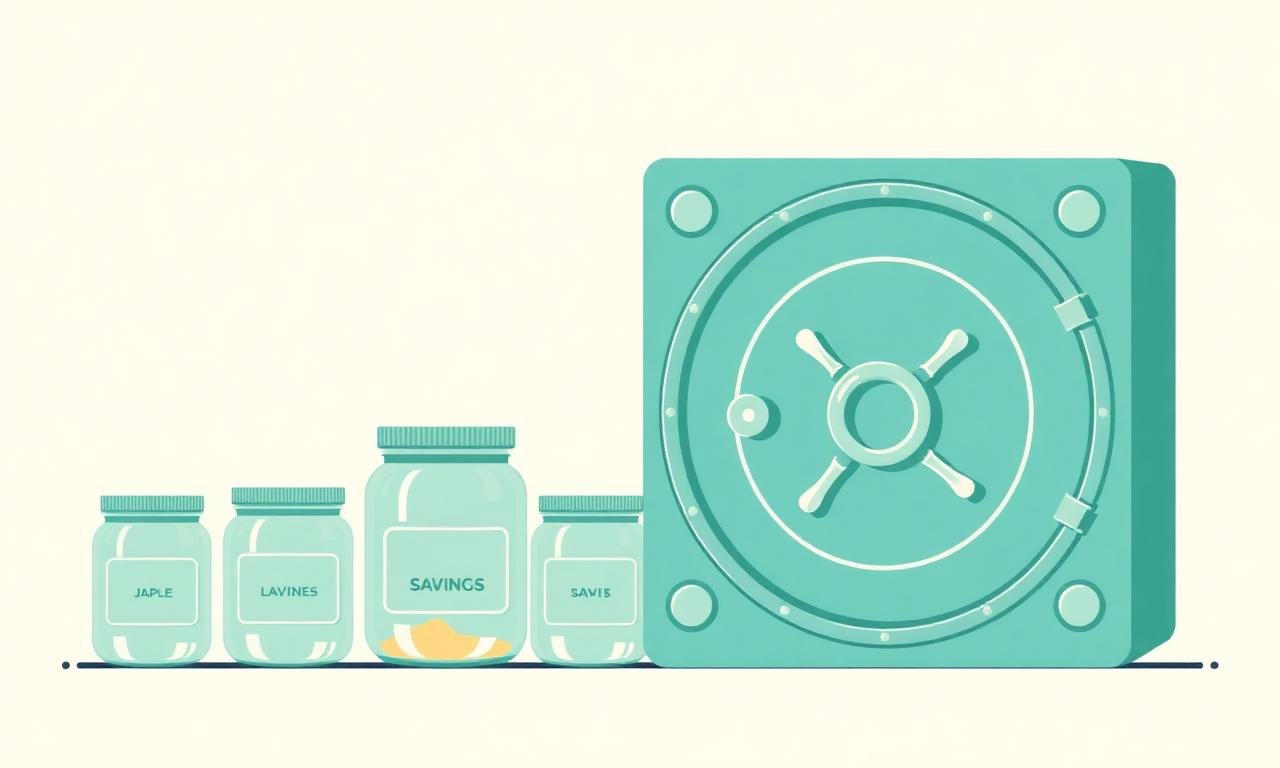
Most households have one savings account labeled, generously, 'Savings.' Inside it lives the emergency fund, the down payment dream, next year's vacation, the kids' summer camp money, and the vague awareness that the car will eventually need new tires. When everything shares a single bucket, every withdrawal feels like progress lost — even when the spending was completely planned.
Sinking funds solve that. They are simply named, pre-funded savings categories for predictable expenses. Knowing which goals belong in a sinking fund and which belong in a regular savings account is one of the small organizational shifts that quietly changes how money feels.
Sinking fund vs savings account, plain English
A savings account is a place. A sinking fund is a purpose. You can have many sinking funds living inside one savings account, distinguished only by a spreadsheet or a budgeting app — or you can have a dedicated account per fund. The point is the labeling and the funding rhythm, not the number of accounts.
A sinking fund is for a known future expense — Christmas, annual insurance, car maintenance, the next family trip. You estimate the total cost, divide by the months until the expense, and save that amount each month so the money is sitting there when the bill arrives. A general savings account, by contrast, is open-ended. It might be an emergency fund or a long-term saving target without a specific date attached.
What deserves a sinking fund and what does not
A good sinking fund target meets three tests: the expense is fairly predictable, it would otherwise hit the budget as a 'surprise,' and the dollar amount is meaningful — usually at least $200.
Common winners include annual insurance premiums (auto, home, renters, life), holiday gifts, vacations, car maintenance, vet bills for pets you already have, kids' school costs that hit in August, and big subscriptions that renew once a year. Each of these has wrecked plenty of budgets simply because they were not on the radar.
Top sinking funds most households benefit from immediately:
- Auto: maintenance, registration, eventual replacement
- Holidays and gifts: a single combined fund is easier than per-occasion
- Travel: even modest trips, planned ahead instead of charged
- Annual insurance premiums (if you pay yearly to get a discount)
- Home repairs: roughly 1% of home value per year for owners
💡 Pro Tip
If a category surprises you more than once in two years, it belongs in a sinking fund. Surprise is the test, not size.
Where to physically store sinking funds
There are two reasonable approaches. The first is one savings account holding many sinking funds, tracked by a simple spreadsheet column-per-fund. The second is one savings account per fund, possible at most online banks that allow you to open multiple sub-accounts for free.
The single-account approach is simpler to set up; the sub-account approach is harder to accidentally misuse, because every dollar in 'Car Maintenance' is visibly separate from 'Vacation.' For households still building the budgeting habit, the sub-account approach is usually worth the extra fifteen minutes of setup.
The funding rhythm that actually works
List every sinking fund you want to start with. For each one, estimate the annual expense and divide by twelve. That is the monthly contribution. Set up an automatic transfer on payday for the total amount, then split that transfer across the accounts or labels.
Within ninety days, every sinking fund should have at least one month of contribution in it. Within a year, most funds will start hitting their targets just before the expense arrives — and that is when the system really clicks. The first Christmas you pay for entirely from a sinking fund is genuinely one of the most satisfying moments in personal finance.
Three mistakes that quietly undermine sinking funds
First, treating sinking funds as part of your emergency fund. They are not. Sinking funds are for expected costs; the emergency fund is for unexpected ones. Mixing the two means a 'surprise' car repair eats next year's vacation.
Second, underestimating the targets. Use last year's actual numbers, not what you wish you had spent. If holidays cost you $900 last year, do not budget $400 for this year — you will end up funding the gap with a credit card.
Third, not adjusting after the first year. Once you have twelve months of real numbers in each fund, revisit the contributions. Some will need more, some less. The system improves every year you run it.
⚠ Watch Out
If you do not have an emergency fund yet, build the $1,000 starter fund first — then start sinking funds. Skipping the starter fund means the first surprise will raid your sinking funds, and the whole system unravels.
The quiet psychological payoff
Sinking funds are not just an accounting trick. They change the emotional experience of spending. Buying Christmas gifts from a sinking fund feels different from buying them on a credit card — even when the dollar amount is identical. The money was already named, already saved, already given permission to leave.
Households that run sinking funds consistently report less December stress, fewer surprise-expense arguments, and a stronger sense of being in control of their financial calendar. The mechanics are simple. The relief is large.
Sinking funds are the connective tissue between a working budget and a calm financial year. Start with three or four — auto, holidays, travel, and one annual insurance bill — fund them automatically on payday, and let the system mature for a full year before judging it. By the second year, the predictable surprises that wreck most budgets will simply stop being surprises.

Written by
Sarah MitchellAdmin · Verified
Editor-in-Chief · CFP®
Sarah leads the WealthPulse editorial team. A Certified Financial Planner with 12 years guiding families out of debt and into investing, she paid off $47K of her own student loans in 26 months and personally reviews every guide published on the site.
Related Articles
 Saving 7 min read
How Much Should You Really Keep in an Emergency Fund?
Three months? Six months? A year? The honest answer depends on five factors most articles never mention — your job stability, household income streams, fixed monthly costs, insurance coverage, and the bare-minimum survival number you can actually live on if everything goes sideways for a full quarter.
 Priya ShahJune 2026Beginner
 Saving 6 min read
The Best High-Yield Savings Accounts for 2026 (And How to Pick One)
Online savings accounts now pay roughly ten times what the average brick-and-mortar bank offers, but the highest advertised rate is rarely the right choice. Learn the five features that matter more than the APY headline and the two common gotchas that quietly reduce the rate after your first deposit.
Priya ShahMay 2026Beginner Saving 9 min read
How to Save Your First $1,000 in 60 Days (Even on a Tight Income)
The line between zero saved and one thousand dollars saved is the most psychologically meaningful jump in personal finance. A focused two-month sprint with one cut, one earn, and a separate account is the fastest reliable path there.
Priya ShahJune 2026BeginnerComments are coming soon. In the meantime, share your story on our newsletter — we feature one every Tuesday.