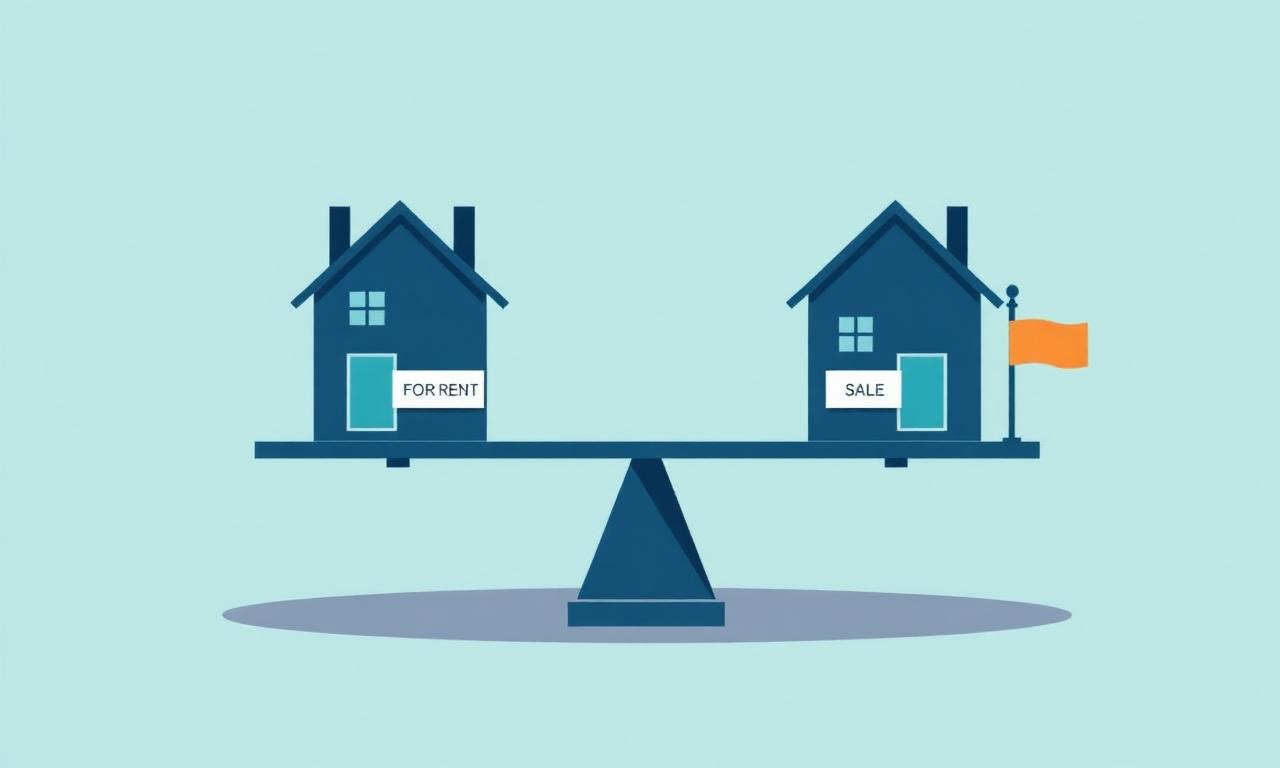
The 'renting is throwing money away' line is one of the most repeated and least useful pieces of advice in personal finance. Both renting and buying involve substantial costs, both can build or destroy wealth depending on how they are executed, and the right answer depends far more on your specific situation than on general principles.
This guide walks through the real math behind a rent-vs-buy decision in 2026, the hidden costs that most online calculators understate, and the question that quietly matters more than any spreadsheet output.
Why 'renting is throwing money away' is misleading
The phrase implies that homeowners build wealth automatically while renters spend money for nothing. The reality is messier. Homeowners pay interest, property taxes, insurance, maintenance, and transaction costs that, in many situations, equal or exceed what renters pay for housing — without the equity bump.
Renters, meanwhile, are paying for shelter and flexibility, not 'nothing.' A renter who consistently invests the difference between renting and the full cost of homeownership can build comparable wealth to a homeowner over the same period, depending on local markets and time horizons.
The true monthly cost of owning a home
When comparing rent to a mortgage payment, the most common mistake is comparing rent only to principal and interest. The fair comparison includes everything that goes out the door because you own the home.
Add up: the monthly mortgage principal and interest, property taxes (often 1–2% of home value annually), homeowners insurance, HOA fees if applicable, monthly maintenance reserve (a useful rule of thumb is 1% of home value per year, divided by 12), and the opportunity cost of the down payment (the return that money would have earned if invested instead).
Subtract the principal portion of your monthly mortgage payment (that part builds equity, not cost) and any tax benefits if you itemize. The remaining number is your true monthly cost of ownership. That is the apples-to-apples comparison with rent.
1.5–2.5%
Typical 'all-in' annual cost of homeownership beyond principal and interest, as a percent of home value (taxes + insurance + maintenance + opportunity cost)
The true monthly cost of renting (and the offsetting benefit)
Renters pay rent, renters insurance (often $10–$25 a month), and any utilities not included in rent. They generally do not pay property tax, maintenance, or HOA fees. They also do not build equity in the property.
The fair counterpart to a homeowner's equity build is the renter's invested savings. If renting costs $500 a month less than the true cost of owning the same property, and the renter actually invests that $500 a month at long-term market returns, the long-term wealth outcome depends heavily on local home price appreciation versus market returns over the same period.
The five-year rule that protects most buyers
Real estate transaction costs are substantial. Buying typically involves closing costs of 2–5% of the home price; selling involves agent commissions and additional closing costs of roughly 7–9%. Total round-trip costs of 9–14% mean that selling a home within a few years often produces a loss even if the home appreciated modestly.
A common rule of thumb is that buying makes financial sense only if you reasonably expect to stay in the home for at least five years, ideally seven or more. The shorter your expected stay, the stronger the case for renting — independent of any other factor.
⚠ Watch Out
Buying a home you expect to sell within three years rarely pencils out, even in appreciating markets. Transaction costs alone usually eat the gains.
Why the answer varies so dramatically by city
In some metro areas, renting an equivalent home is meaningfully cheaper than the true cost of owning — sometimes by 30–50%. In other metros, the costs are roughly equal, and in a few places owning is genuinely cheaper than renting on a monthly basis once equity build is counted.
The price-to-rent ratio (annual cost of buying divided by annual rent for an equivalent home) is the quickest way to get a feel for your local situation. Ratios above 20 often favor renting from a pure-math standpoint; ratios below 15 often favor buying. Ratios between 15 and 20 are close enough that lifestyle and stability factors typically tip the decision.
Non-financial factors that often matter more than the math
How long are you likely to stay in the area? Buying favors stability. How much do you value the ability to customize your home? Owning favors customization. How much does maintenance — fixing your own toilet, mowing your own lawn — appeal or repel? Owning involves more of both.
Are you in a relationship where moves are likely for a partner's career? Renting preserves flexibility. Are you in a stable life chapter where roots feel valuable? Owning supports rooting. These factors are not soft 'tiebreakers' to use after the math; for most households they are the decision, with the math as a sanity check.
A simple test you can run in twenty minutes
Pick a specific home you would consider buying and a specific similar rental in the same neighborhood. Calculate the true monthly cost of owning using the framework above, and compare it to the monthly cost of renting plus the long-term expected return on the down payment if invested instead.
If owning is meaningfully cheaper on an apples-to-apples basis and you plan to stay at least five years, buying is likely the right financial choice. If renting is meaningfully cheaper and you would actually invest the savings, renting is likely the right financial choice. If the two come out close, decide based on the non-financial factors and stop worrying about the math.
Rent vs buy is not a one-size-fits-all answer; it is a household-specific calculation that depends on local prices, your expected length of stay, and how you would actually use the cash flow difference. Run the real numbers using the true cost of ownership, apply the five-year rule, and weight the non-financial factors honestly. Done that way, the right answer for your specific household is usually clear within an afternoon.

Written by
Marcus LeeVerified Writer
Index Investing Writer
Marcus has been investing in low-cost index funds since 2008 and teaches new investors how compounding actually works. He covers brokerage choice, asset allocation, and Roth IRA strategy for WealthPulse.
Related Articles
 Real Estate 10 min read
House Hacking 101: How to Live for Free (or Almost Free)
House hacking means buying a small multi-unit property, renting out the other units, and letting your tenants cover the mortgage. It sounds too good to be true — and for some buyers it is. Here is exactly how the math works, what loans you qualify for, and the three personality traits that separate successful house hackers from miserable landlords.
Marcus LeeApril 2026Intermediate Real Estate 13 min read
First-Time Home Buyer Checklist: The 14 Steps Nobody Tells You About
The internet is full of generic 'save 20% down' advice, but the real first-time buyer experience involves earnest money disputes, inspection negotiations, appraisal gaps, lender lock fees, and a closing-day stack of paperwork most people sign without reading. Here is the honest, step-by-step path from pre-approval to keys.
 Priya ShahMarch 2026Intermediate
 Real Estate 10 min read
How Much House Can You Really Afford? A Realistic Framework Beyond the 28% Rule
Mortgage lenders will often approve buyers for far more than they should actually borrow. A more honest cap, the hidden costs that wreck first-year budgets, and a two-question stress test before any offer.
Priya ShahMay 2026IntermediateComments are coming soon. In the meantime, share your story on our newsletter — we feature one every Tuesday.