
Three boring savings products quietly do most of the work for households with short- and medium-term goals: certificates of deposit (CDs), money market accounts (MMAs), and high-yield savings accounts (HYSAs). They look interchangeable from a distance — all three pay interest on cash held at a bank — but each has a job it does better than the others. Picking the wrong one can cost you flexibility, yield, or both.
This guide walks through how each works in 2026, the situations where each one genuinely wins, and the small details (early-withdrawal penalties, rate tiers, FDIC limits) that quietly matter more than the headline interest rate.
The three products in one paragraph each
A high-yield savings account (HYSA) is a regular savings account at a (usually online) bank that pays a meaningfully higher rate than traditional brick-and-mortar savings. The rate is variable and can change at any time. You can withdraw money any business day, often instantly, sometimes with a small monthly transaction limit.
A money market account (MMA) is similar to a HYSA but often comes with check-writing privileges or a debit card, and frequently requires a higher minimum balance. Rates are usually competitive with HYSAs and sometimes slightly higher at the top end. MMAs are FDIC-insured at banks (and NCUA-insured at credit unions).
A certificate of deposit (CD) is a deposit you commit to leaving in place for a fixed term — anywhere from three months to five years — in exchange for a guaranteed interest rate. Withdrawing early triggers a penalty, typically a few months of interest. The rate is fixed for the entire term, which is the main reason to use one.
Which product fits which goal
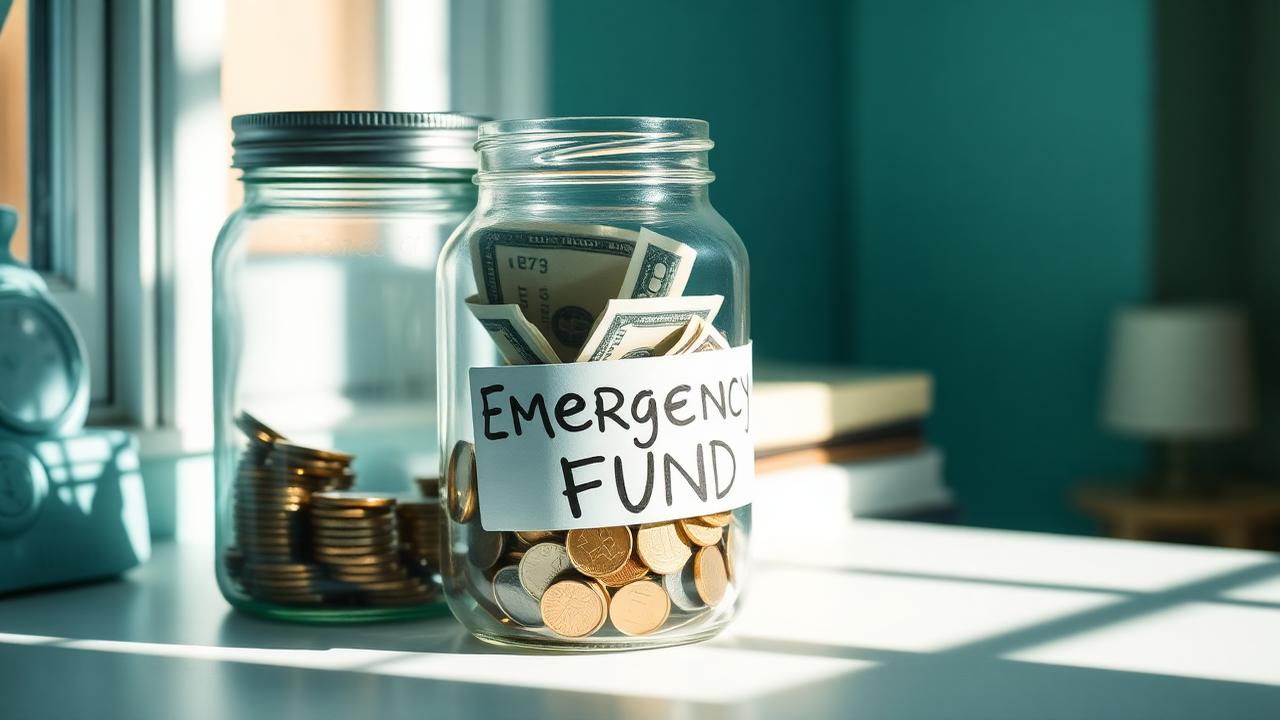
For emergency funds, use a HYSA. The defining feature of an emergency fund is that you can reach it instantly without penalty. CDs disqualify themselves on that test even when their rates look attractive.
For sinking funds with a known date inside twelve months — Christmas, summer travel, a planned car repair — HYSAs or MMAs are the right home. The flexibility matters more than the small rate difference.
For savings tied to a specific future date one to five years away — a planned down payment, a known tuition bill, an upcoming surgery copay — a CD can be the right choice. You lock the rate in, you know exactly what the account will hold on the maturity date, and the early-withdrawal penalty is a feature that protects you from raiding the fund.
💡 Pro Tip
If you have $30,000 saved for a house down payment two years out, splitting it across a HYSA and a CD ladder lets you keep some flexibility while locking in a higher rate on the rest.
FDIC and NCUA insurance — what is actually protected
Deposits at FDIC-insured banks are protected up to $250,000 per depositor, per insured bank, per ownership category. Credit unions carry equivalent NCUA insurance with the same limits. If a household has more than $250,000 in cash at a single institution, it is worth spreading deposits across multiple insured banks to keep everything covered.
All three products — HYSAs, MMAs, and CDs — at insured institutions carry this same protection. The product type does not change the safety; the institution and the ownership structure do.
⚠ Watch Out
A money market account is not the same thing as a money market mutual fund. Mutual funds are investments and are not FDIC-insured, even though they sound similar. Always confirm you are opening a deposit account, not a fund.
How a CD ladder works (and when it is worth the effort)
A CD ladder splits a lump sum across several CDs of different maturities — for example, $5,000 each into one-, two-, three-, four-, and five-year CDs. As each CD matures, you reinvest it into a new five-year CD, and after five years you have a portfolio of five-year CDs with one maturing every year.
The benefit is that you usually capture the higher rates of longer-term CDs while still having access to one-fifth of your money every twelve months. Laddering is most worthwhile when CD rates are noticeably higher than HYSA rates and you are saving for medium-term goals where some flexibility matters.
The fine print that actually matters
For HYSAs, watch for tiered rates that pay the headline rate only on balances under a small cap, and 'promotional' rates that drop after a few months. Read the rate disclosure, not the marketing page.
For MMAs, watch for minimum balance requirements that, if missed, trigger a monthly fee large enough to wipe out a year of interest. Confirm your typical balance comfortably clears any minimum.
For CDs, the two numbers that matter most are the APY (the annualized rate including compounding) and the early-withdrawal penalty (usually expressed in months of interest). The longer the term, the steeper the penalty — and the more confident you need to be that you will not need the money early.
What changes when interest rates move
HYSA and MMA rates adjust roughly in step with general short-term interest rates. When the broader rate environment falls, your savings rate will probably fall with it. CDs are different — once you lock in a rate, it is yours for the term regardless of what happens to the market.
This is why CDs become more attractive when rates appear to have peaked. Locking in a longer-term CD near the top of a rate cycle preserves yield you would otherwise lose if rates dropped. Predicting the top is impossible, of course, which is exactly why CD ladders exist.
There is no single 'best' product for cash — there are three products that each have a clean job. Put the emergency fund and short-term sinking funds in a HYSA, consider an MMA if the check-writing or debit access matters, and reach for CDs (or a CD ladder) for goals tied to a specific date one to five years out. Match the product to the job and your cash starts working harder without taking on any meaningful new risk.

Written by
Marcus LeeVerified Writer
Index Investing Writer
Marcus has been investing in low-cost index funds since 2008 and teaches new investors how compounding actually works. He covers brokerage choice, asset allocation, and Roth IRA strategy for WealthPulse.
Related Articles
 Saving 7 min read
How Much Should You Really Keep in an Emergency Fund?
Three months? Six months? A year? The honest answer depends on five factors most articles never mention — your job stability, household income streams, fixed monthly costs, insurance coverage, and the bare-minimum survival number you can actually live on if everything goes sideways for a full quarter.
 Priya ShahJune 2026Beginner
 Saving 6 min read
The Best High-Yield Savings Accounts for 2026 (And How to Pick One)
Online savings accounts now pay roughly ten times what the average brick-and-mortar bank offers, but the highest advertised rate is rarely the right choice. Learn the five features that matter more than the APY headline and the two common gotchas that quietly reduce the rate after your first deposit.
Priya ShahMay 2026Beginner Saving 9 min read
How to Save Your First $1,000 in 60 Days (Even on a Tight Income)
The line between zero saved and one thousand dollars saved is the most psychologically meaningful jump in personal finance. A focused two-month sprint with one cut, one earn, and a separate account is the fastest reliable path there.
Priya ShahJune 2026BeginnerComments are coming soon. In the meantime, share your story on our newsletter — we feature one every Tuesday.